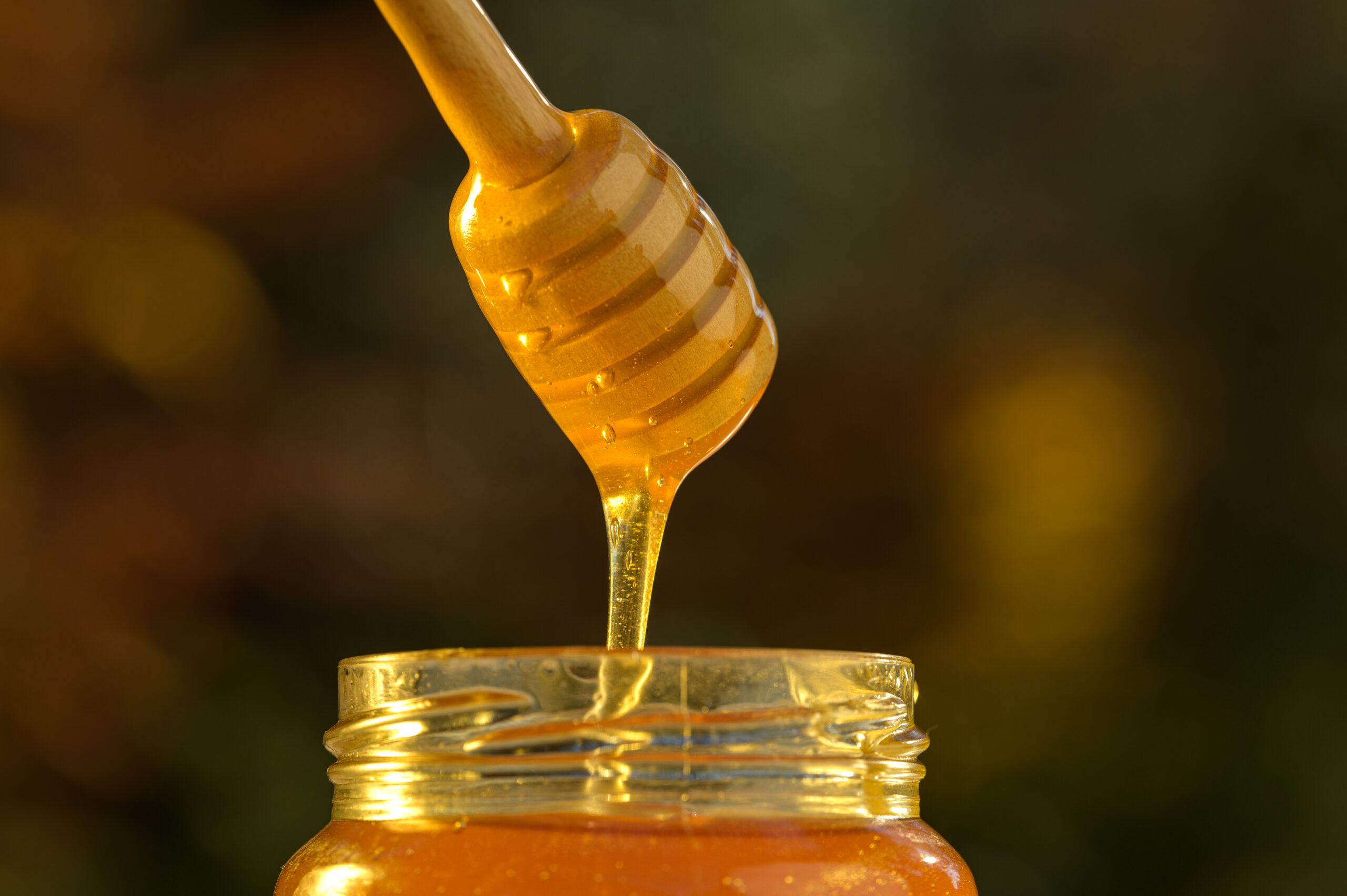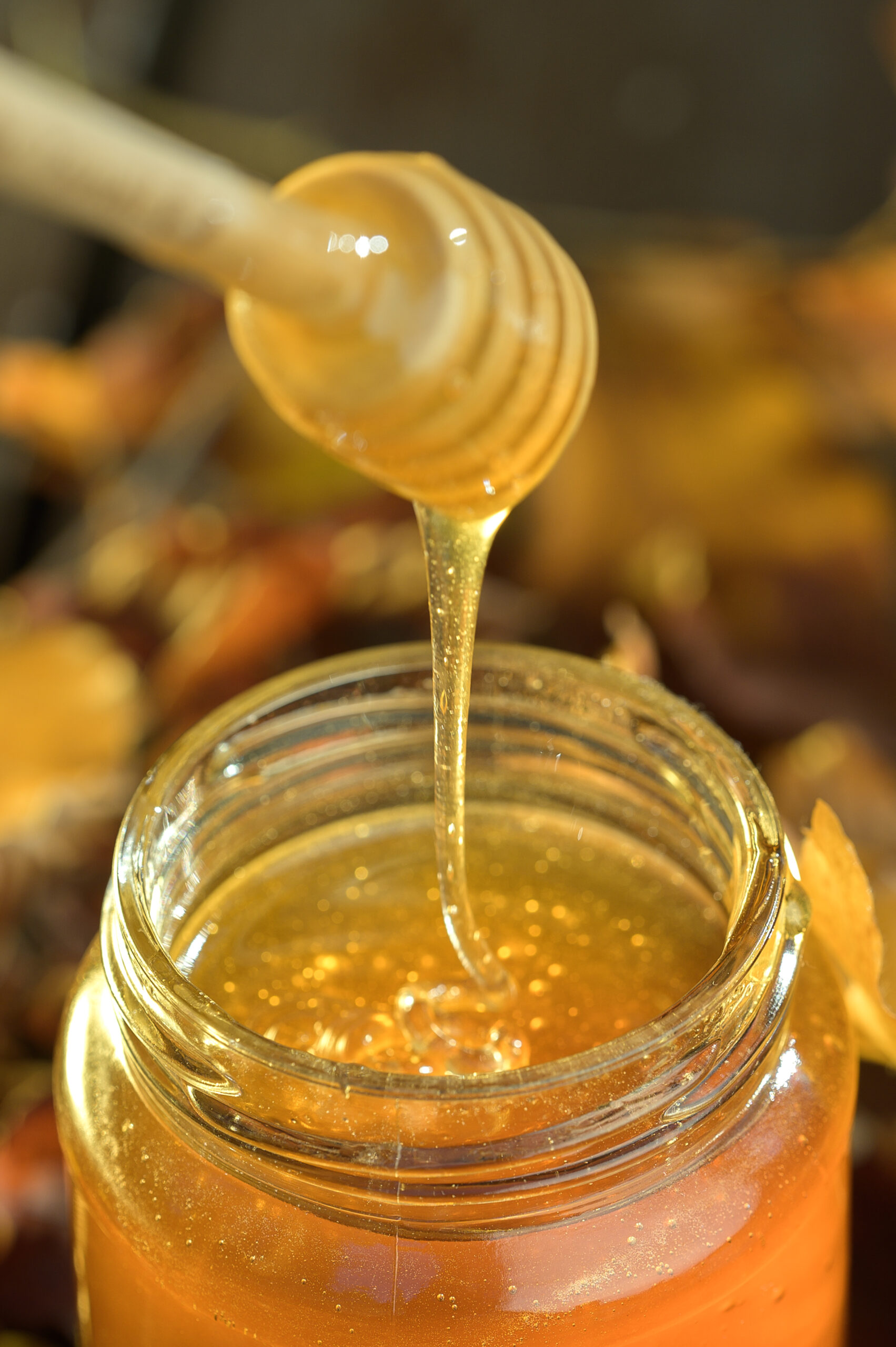
Honey is a food of high nutritional value and can be included as part of a healthy and balanced diet. It has strong antioxidant and antimicrobial activity, due to its content in phenolic acids and flavonoids. As well as antimicrobial action, since it accelerates wound healing. Honey generally contributes to the proper functioning of the body, such as the respiratory system, immune, cardiology, digestive, urology, skin diseases, etc.
All types of honey crystallize, some more and others less, while some may never because of their composition.
Blossom honeys (honeys derived from flowers, blossoms, light-colored) crystallize more quickly, due to their natural glucose content, while honey species derived from honeydew secretions (honeydew found in coniferous trees) more slowly or never.
At this point we need to point out that all types of honey are beneficial for the human body, as long as the honey is produced by the bee, this miraculous insect. The type of honey we choose has to do with what flavor we like, such as some trace elements that it may contain more percent than another variety.
It contains more than 180 valuable elements, such as carbohydrates – sugars, vitamins, proteins, amino acids, enzymes, minerals – trace elements and organic acids.
Carbohydrates-sugars are the solid components of honey at a rate of 95-98%. About 20 types of sugars have been found in honey, such as fructose, glucose, sucrose, lactose, maltose, isomaltose, trehalose, arabinose, turanose, erlose, sucrose, raffinose, etc. The main ones are fructose and glucose with a percentage of 60-70%.
Vitamins that have been found in honey are: B1 (thiam), B2 (riboflavin), B3 (niacin), B5 (pantothenic acid), B6 (pyrixodine), C (ascorbic acid), biotin, folic acid, A (provitamin or carotene), D, E, B12, K, etc.
Enzymes such as amylase, invertase, lipase, lactase, diastase, catalase, phosphatase, etc.
Proteins and amino acids, such as proline (the main amino acid of honey), lysine, histidine, arginine, tyrosine, leucine, glutamic acid, phenylanine, tryptophan, etc.
Minerals-trace elements, such as potassium, calcium, magnesium, phosphorus, iron, copper, zinc, selenium, sodium (in small content), potassium, chlorine, manganese, sulfur, silicon, etc.