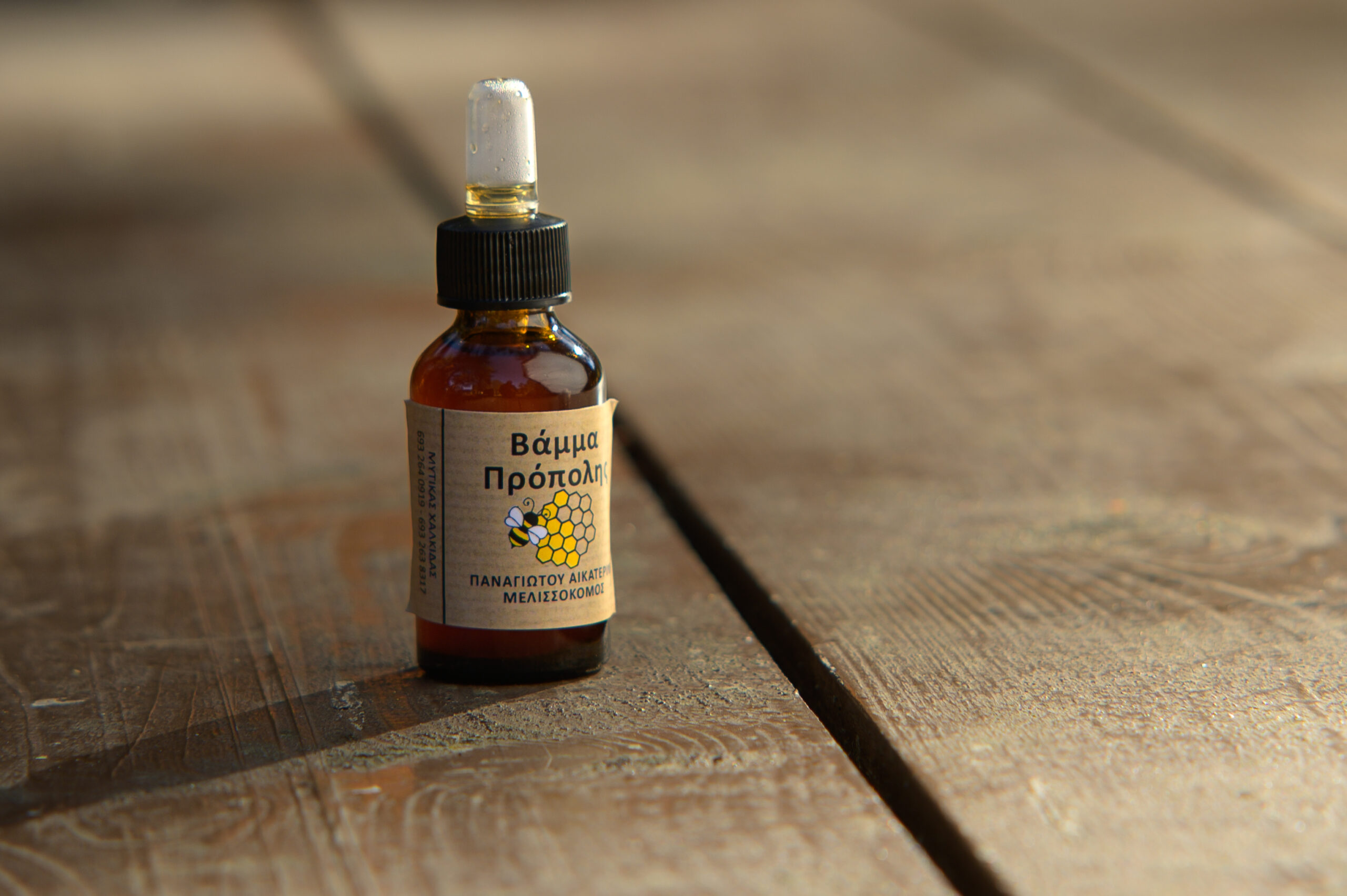
Description
Propolis is a sticky substance that bees collect from the resins and gums of trees and enrich them in their mouths with various enzymes they produce. These substances are produced by plants to protect their wounds or protect themselves from their enemies, e.g. bacteria, insects, fungi, etc. As the word propolis says, it means “before the gate” and bees use it to restrict the entrance of their nest (hive) from enemies. In addition, they use it to coat the inner walls of their hive (or natural nest), close the slots, pointed protrusions and crevices so well that they ensure 100% disinfection and sterilization of their home. Also, with propolis bees embalm various insects, large moths, lizards, mice and other heavy bugs for those that have entered the hive and are not able to carry them out of it. Thus, they do not allow the development of odours and microbes. They also coat the cells of the honeycombs after the bees hatch and sterilize them so that they are ready for the queen to give birth.
It has a color from dark brown and blackish to yellow with intermediate shades, similar to the plant from where it was collected. At 35 ͦC and above it softens, acquiring plasticity and turns into a sticky substance, while at 65 ͦC it liquefies. If placed in the freezer it hardens and rubs so that it becomes powder. It dissolves in alcohol, but not in water.
Properties: Antibacterial (as against staphylococci, streptococci), anti-inflammatory (against infections by toxins and chemicals), antioxidant (protects vitamin C from oxidation (antiscorbutic), acts against cancer cells, antifungal (acts against fungi, parasites, pathogens), healing (heals wounds, tissues, burns, healing stomach ulcers, skin problems, eczema, stretch marks, in herpes, angina, colds, hemorrhoids, gum diseases, gingivitis, periodontitis, sinusitis, rhinitis, otitis, inflammations of the pharynx, larynx, trachea, stomatitis, asthma, flu, colds, atherosclerosis, strengthens blood capillaries, lymphocytosis, vasodilatory properties). It also has anesthetic properties (local anesthesia, toothache), immune (strengthens the immune system) and antihistamine properties (along with pollen helps immunization), etc.
Ingredients: On average propolis consists of wax 30%, resins and balms 55%, essential oils 10%, pollen 5%.
How to use: Propolis tincture can be used directly on the wound (skin diseases in general), 2-3 times a day or as many as needed. Also, we can pour 20-30 drops (in children 10 drops) into lukewarm water (or even milk an hour before eating) and drink it. We can also do inhalations for bronchitis, pharyngitis, pneumonia.
Preservation and storage: Store in a cool and dry place.


Reviews
There are no reviews yet.